Key takeaways
- The courtyard and the 500-metre rampart walk cost nothing, 8:30am to 7pm every day of the week — here is everything you can see for free.
- Under-18s go into the museum free, and so does everyone on the first Sunday of the month outside July and August, with a reduced rate for 18–25s, teachers and last-hour arrivals: who pays and who does not.
- The museum closes on Mondays outside 1 July–31 August; the free ramparts do not. That single line is why people leave disappointed — check the hours.
- 32 rooms, 7 sequences, about 1,150 objects inside the Musée d’histoire de Nantes, slave trade included, and the one part of the site that is not free — what is actually in there.
- Five tours, 437 reviews, 4.3 average, ranked here from the lowest-priced walk to the highest-priced ride, and not one of them needed to see the free half — I rate each honestly on the tours page.
What you pay for at the château, and what you don’t
The gate is not a ticket barrier. Almost everything outdoors is free; the ticket buys you the museum indoors and nothing else.
Free, every day, no ticket
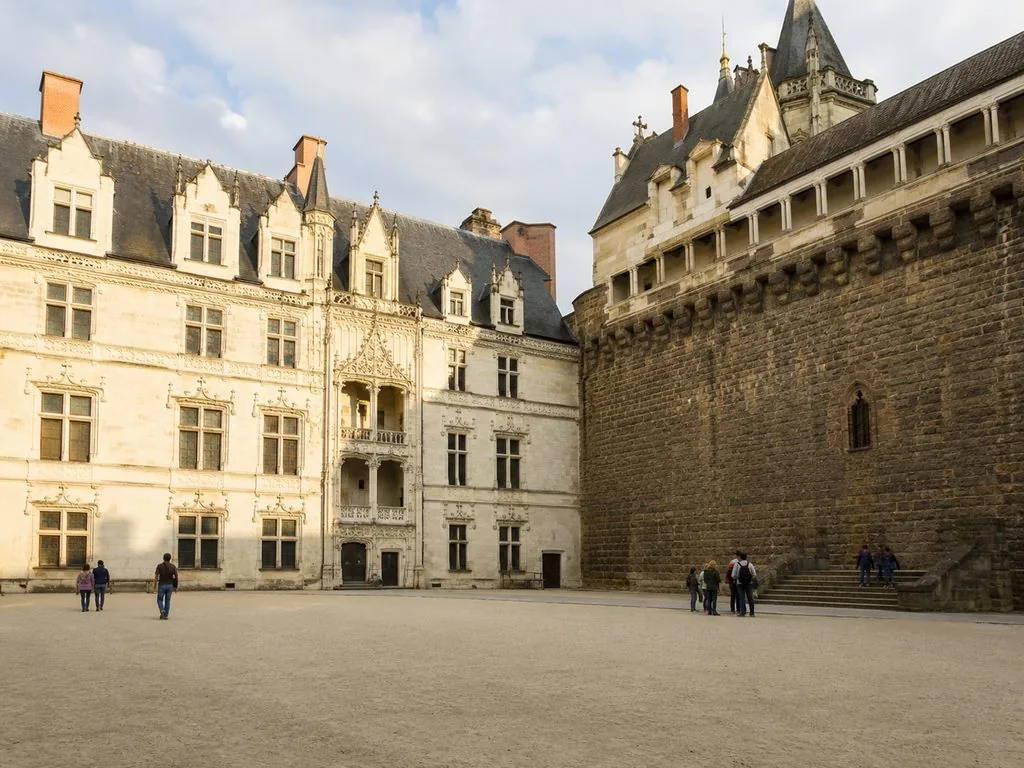
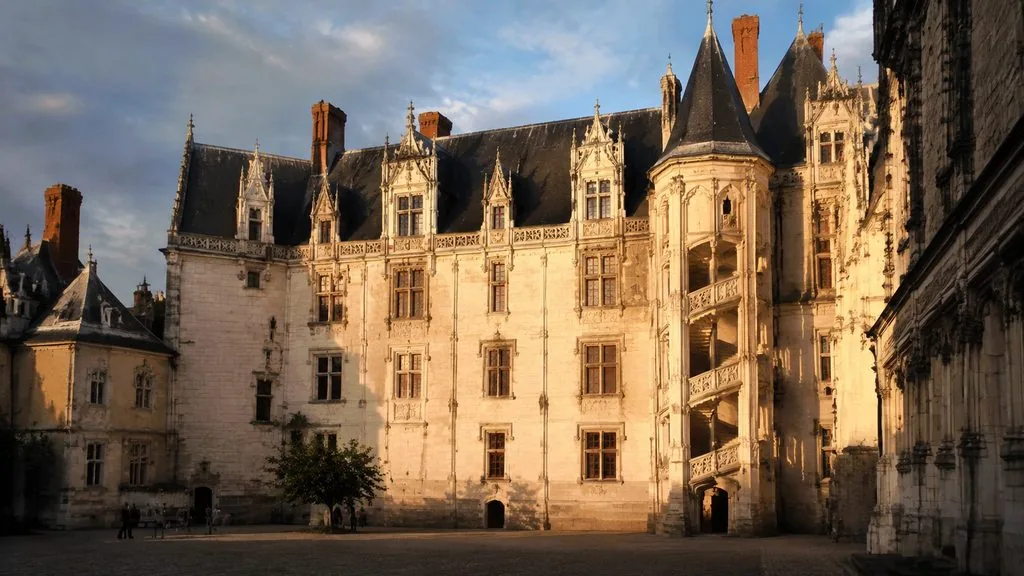
- The courtyard, and the white tufa ducal palace standing in it
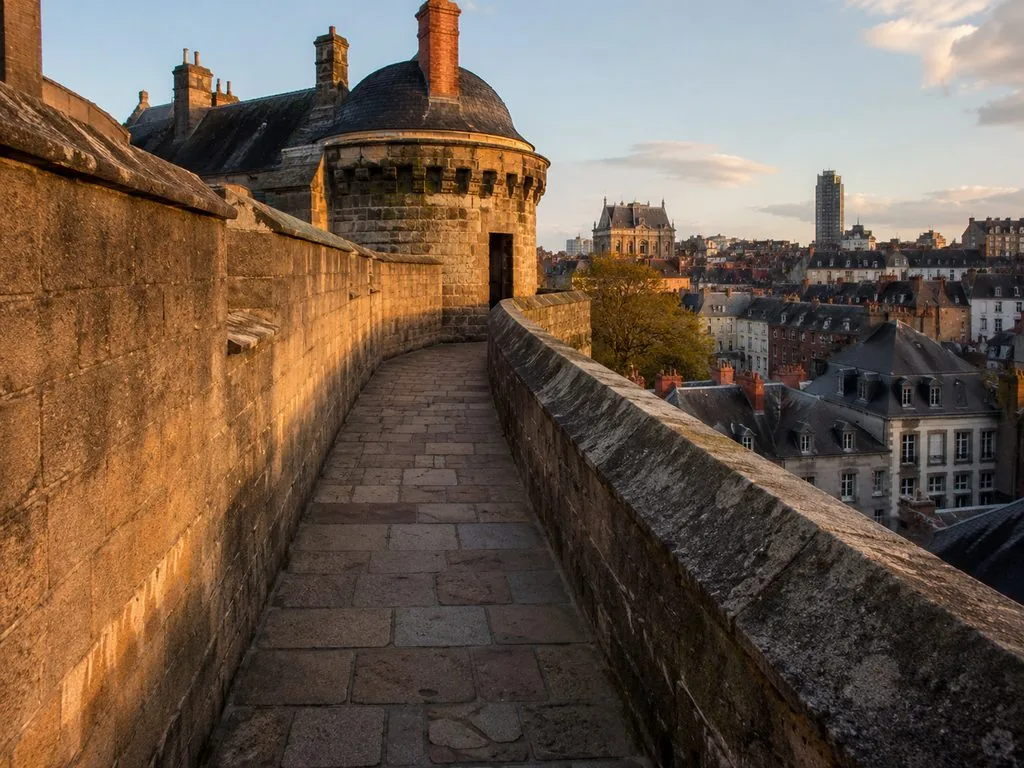
- The 500-metre rampart walk along the top of the curtain wall
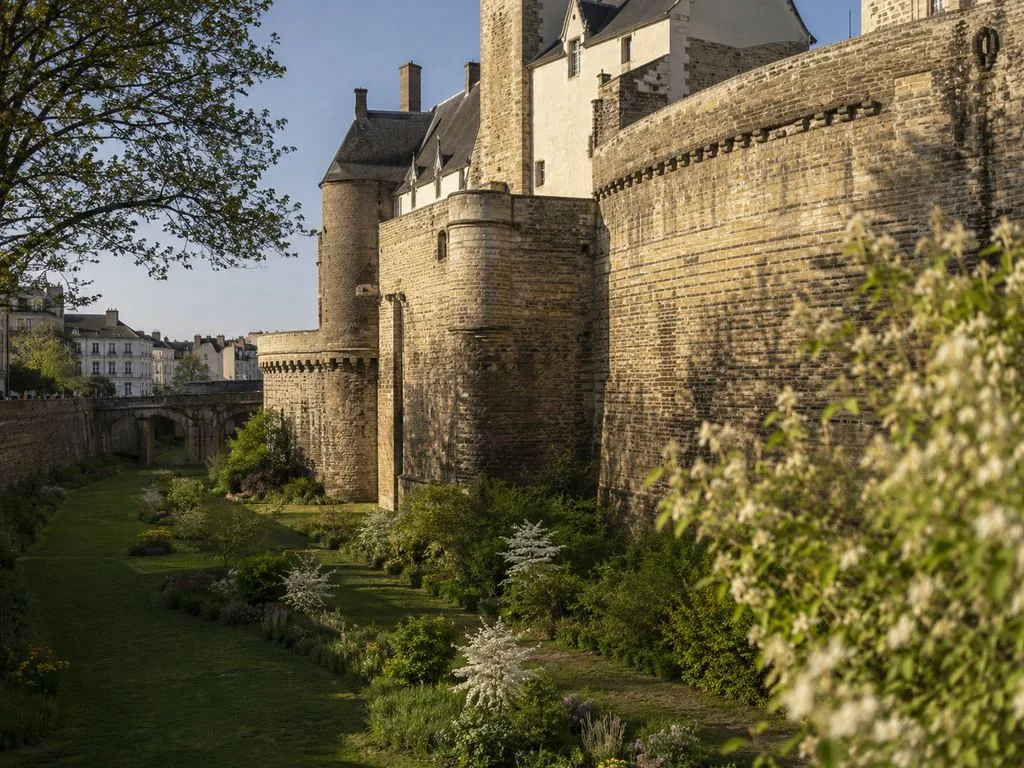
- The moat gardens, 8am to 7pm (8pm in July and August)
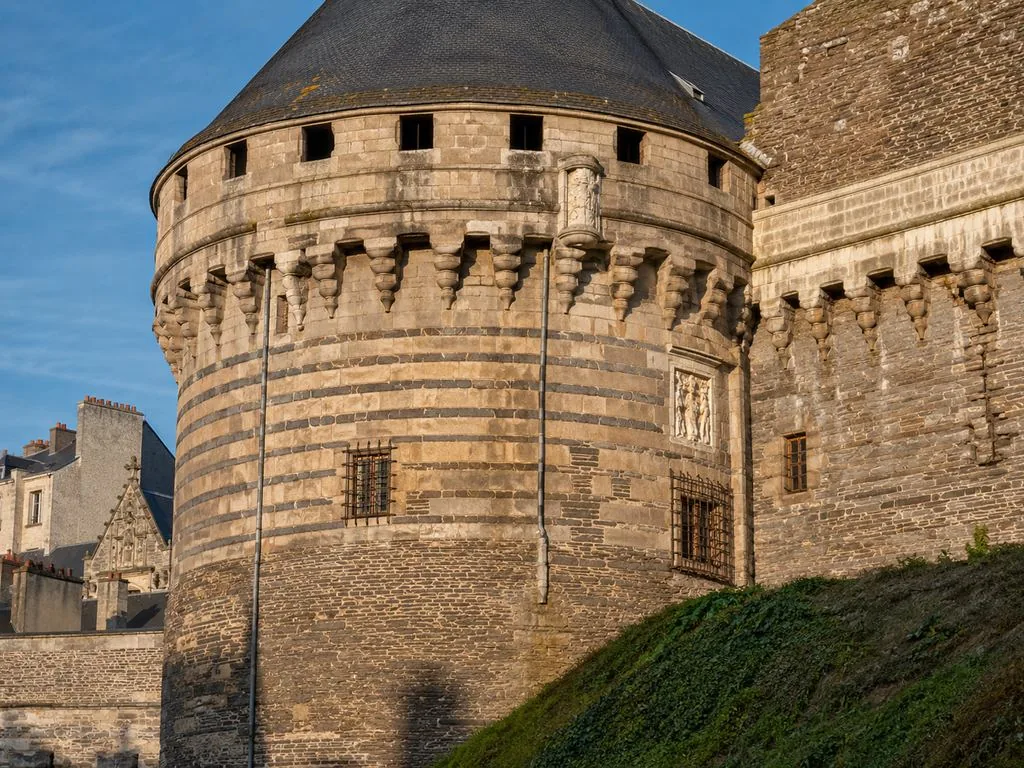
- The seven towers seen from below, drawbridge included
- Under-18s, always, in the museum as well
What the museum ticket covers
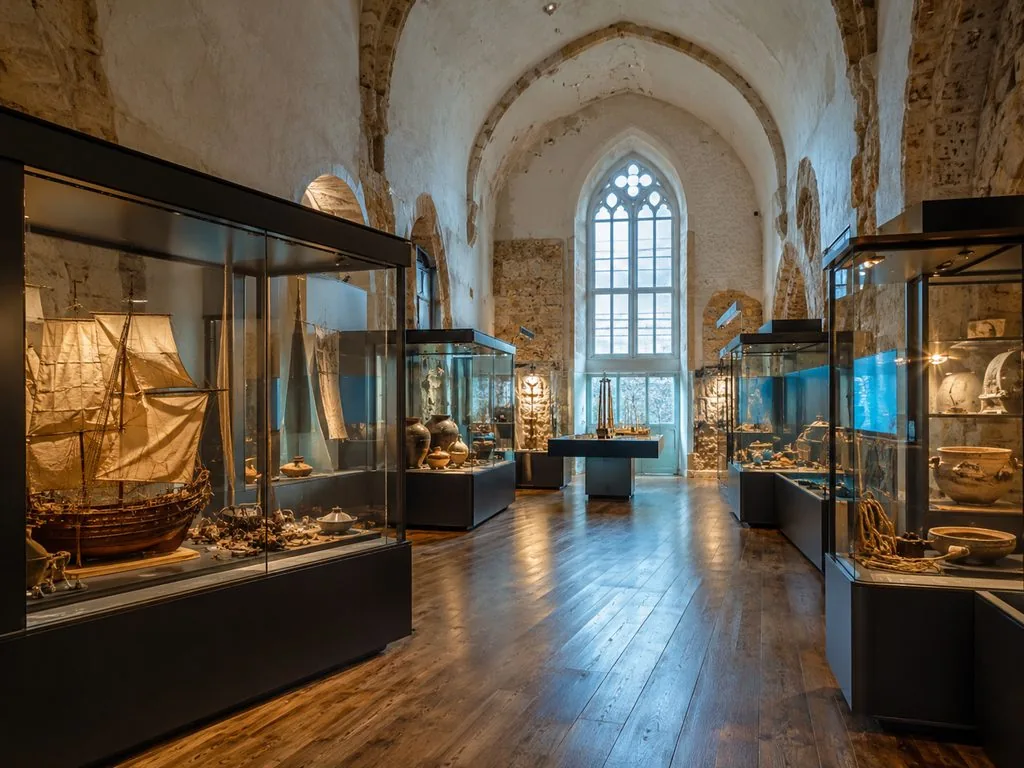
- The Musée d’histoire de Nantes: 32 rooms, 7 sequences, about 1,150 objects
- The temporary exhibition, currently Expression(s) décoloniale(s) #4
- The reduced rate for 18–25s, teachers, and anyone entering in the last hour
- Free on the first Sunday of the month, except July and August
- Not the guide: the château’s own guided visit costs a little more than the museum ticket alone
The visit, in the order I’d do it
Six stages, about half of which cost nothing.
I come in from the Duchesse Anne stop, cross the drawbridge, do the courtyard and the rampart walk before deciding whether the museum is worth a ticket that day, and finish in the moat gardens.
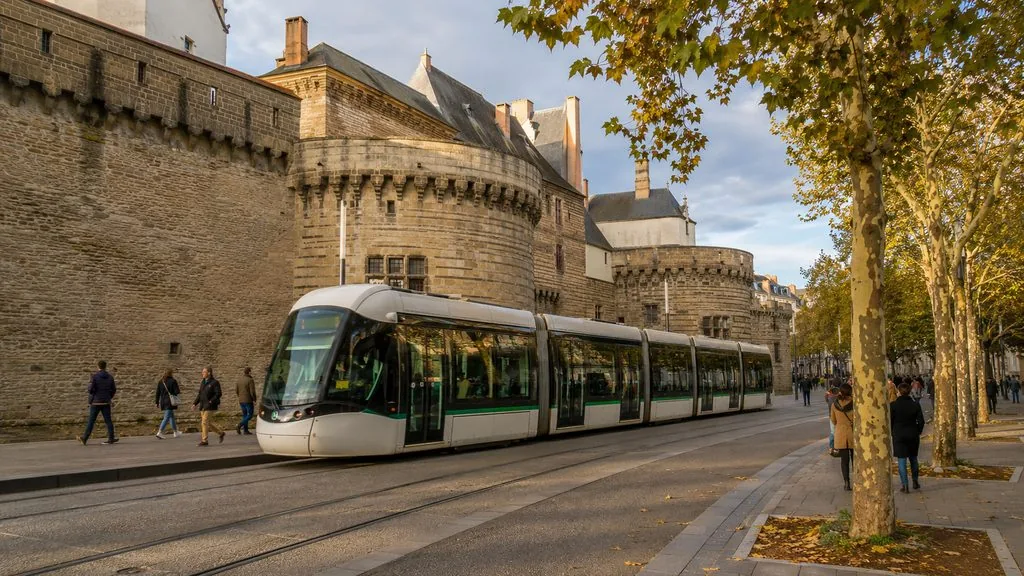
- Duchesse Anne — Tram line 1 and Busway line 4 stop here; the SNCF station is a 10-minute walk away.
- The drawbridge and the Tour du Fer-à-Cheval — The entrance runs past the horseshoe tower, granite blocks laid in courses of schist.
- The courtyard and the white palace — Black war fortress outside, white tufa flamboyant-Gothic residence inside, with the loggias and stair-tower spire Anne de Bretagne added.
- The rampart walk — 500 metres along the top of the curtain wall, seven towers, and the roofs of Nantes from a height most visitors never bother to climb to.
- The seven museum sequences — 32 rooms and about 1,150 objects, from the ducal city through the slave trade to an extension covering 1945 to the present.
- The moat gardens — Free from 8am, and the one place you can stand back far enough to see the whole curtain wall at once.
The free part takes me about 45 minutes at a normal pace; the museum wants an hour and a half at least. I have broken the timings down on how long you need, and if you would rather have the whole thing narrated, the licensed guided tours pick up the same route and keep going into the old town.
How booking a tour works
Decide what you actually need
Entry is cheap or free. You are buying the explanation, or the transport, or both.
Check the language
The lowest-priced old-town walk runs in French only. Check that line before anything else.
Book through GetYourGuide
Live availability, instant confirmation, and free cancellation up to 24 hours on the passes and the old-town walk.
Turn up at the meeting point
Your confirmation carries the address. The château itself is 4 place Marc Elder.
Check dates for the Nantes City Pass
The pass is the one product here that includes museum admission at the château outright, along with the trams, the buses and the river cruise. It is a good buy if you are moving around for two days or more, and a poor one for a single slow day — I do the arithmetic on the City Pass page.
Three ways to spend money at this castle
The lowest-priced walk, the pass that includes the museum, and the private tour. Language is the thing that decides it for most people.
| Nantes: Guided Walk Through the Old Town | Most bookedNantes City Pass: 24/48/72 Hours or 7 Days | Nantes: Must-See Attractions Private Walking Tour | |
|---|---|---|---|
| Relative cost | Lowest-priced | Mid-range | Higher-priced |
| Length | 2–2.5 hours | 24 hours to 7 days | 2 hours |
| Language | French only | EN / FR / ES audio | English or French |
| Museum admission | Not included | Included | Not included |
| Group | Shared walk | Not a group product | Private, just you |
| Rating | 5.0 · 7 reviews | 4.2 · 365 reviews | 4.8 · 28 reviews |
| Best for | Budget, French speakers | Two days or more of moving around | One guide, your route |
| View → | Book this → | View → |
Photo Gallery
The château, and the city around it
Six views, five of which you can reach without buying anything.

The five tours I’d consider in Nantes
Two of these include admission to the château museum; three do not, and do not need to. Ratings and review counts are GetYourGuide’s live figures, and the current price sits in the booking widget rather than on this page.
 Includes museum
Nantes City Pass: 24/48/72 Hours or 7 Days
 Private
group
Private
groupNantes: Must-See Attractions Private Walking Tour
 Best value
Nantes: Guided Walk Through the Old Town
 Covers
most ground
Covers
most groundNantes: 2.5-Hour Electric Bike Tour with a Local Guide
 Castle entry included
Nantes: Monumental Sightseeing Tour with a Licensed Guide
What people said after booking
Review snippets from GetYourGuide, first names and countries as the platform shows them.
Great fun. Buses and trams are really easy. Thoroughly enjoyed the Machines. Went kayaking and went on a river cruise.
Excellent 2-hour tour of Nantes with a very good guide who gave an enthusiastic history of the city.
A passionate live guide, very friendly and pleasant to listen to.
The electric bikes made it possible for us to see much more in a short time without working too hard.
We loved the sightseeing tour. Very interesting explanations about the city. Always attentive.
I purchased the 48-hour pass, and it was very much worth it.
Ratings and reviews are the operators’ live GetYourGuide figures. Read our full tour reviews ›
Things I get asked before people book
Four short answers that change what you should buy.
Do I need a tour to get in?
No. The courtyard and ramparts are free and unticketed, and the museum sells its own ticket at the desk. The only tour here that includes château admission outright is the Nantes City Pass; the monumental tour includes 30 minutes inside through a separate entrance. Everything else is bought for the guide, not the gate — see all five tours.
It’s Monday. Have I wasted the trip?
Not unless you came only for the museum. Outside July and August the museum closes on Mondays, but the courtyard, the rampart walk and the moat gardens keep their normal hours. Full timetable on opening hours.
Is the City Pass worth buying?
For two or more days of trams, museums and the river cruise, yes; it is priced by duration, and the longer passes cost more overall but less per day. For one slow day built around a single low-cost museum ticket, no — the reasoning is on the City Pass page, and the cost page walks through a day here.
Which tour if I only speak English?
Not the lowest-priced old-town walk, which runs in French. The private walking tour runs in English or French, the e-bike tour in English, French and Spanish, and the monumental tour in Spanish, French and English — compared side by side on guided tours.
Can’t make these dates?
Browse more available Château des ducs de Bretagne tour and find one that fits your schedule — all with instant confirmation and free cancellation.
The Château des Ducs de Bretagne, explained
I grew up three streets from this castle, in Bouffay, and I still cross the moat gardens most mornings. In five seasons of walking visitors around Nantes the same thing happened over and over: people stood outside the gate working out whether the museum was worth a ticket, without realising that the part I would have shown them first costs nothing. So here is the castle, explained, before you decide what to spend.
Black fortress outside, white palace inside
Walk the outside of the walls first. Roughly 500 metres of curtain wall with seven towers, built from granite blocks laid in courses of schist: the Tour du Fer-à-Cheval, the Tour des Jacobins, the Tour des Espagnols, the Tour de la Couronne d’Or and the Vieux Donjon among them. It reads as pure military engineering, and it is.
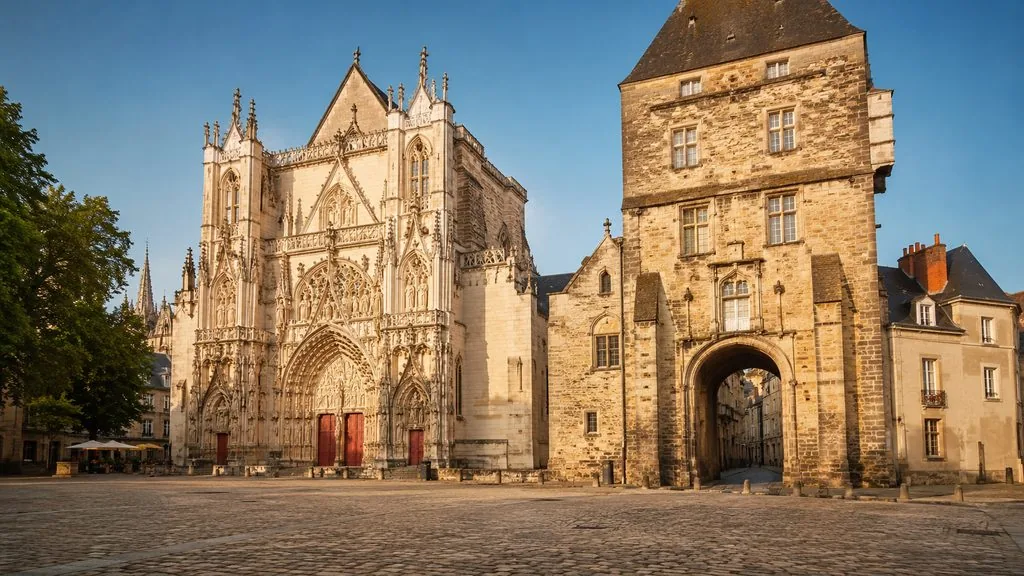
Then cross the drawbridge and the whole thing changes. The fifteenth-century ducal residence in the courtyard is flamboyant Gothic with Renaissance touches, built in white tufa, with sixteenth- and eighteenth-century buildings alongside. The reason for the contrast is political rather than aesthetic. A duke holding off a French king needed granite; the same duke, running a court he wanted taken seriously in Europe, needed a palace. He built both, one inside the other, and it is free to look at.
François II, Anne de Bretagne, and the end of Breton independence
Guy de Thouars, Duke of Brittany, put the first castle here in 1207. The castle you visit was begun in 1466 by Duke François II, the last independent duke, and continued by his daughter Anne de Bretagne, who added the loggias and the spire over the main stair tower. Anne went on to marry two kings of France, and that marriage is where Brittany’s independence ends. It is why people still argue in Nantes about whether the city belongs to Brittany or to the Pays de la Loire it is administered from. The argument starts in this courtyard.
Two later dates matter as much. In April 1598 Henri IV promulgated the Edict of Nantes here. On 17 July 1800 a rotten ceiling in the Tour des Espagnols gave way onto the powder store below; the explosion killed around sixty people and wrecked part of the castle. Classified a monument historique in 1840, the site was restored between 1997 and 2007, three of those years shut. The museum reopened on 9 February 2007.
What the museum actually does with the slave trade
The Musée d’histoire de Nantes occupies 32 rooms and tells the city in 7 sequences, with about 1,150 objects and a great deal of interactive multimedia. Its spine is the Atlantic slave trade. Nantes was France’s largest slave-trading port, and the museum does not soften that, does not park it in a side room, and does not let the merchant fortunes elsewhere in the building be admired without it. If you visit one part of the paid museum with your full attention, make it this one.
Around it the narrative runs from the ducal city through the industrial city, both world wars, and an extension covering 1945 to the present. That last stretch is uneven, and it is where I see people start checking their phones. The temporary exhibition, currently Expression(s) décoloniale(s) #4 from 8 May to 8 November 2026, is included in the same ticket. What the museum is not is a set of furnished medieval rooms. If that is what you came for, skip the ticket.
The free half, and why most people miss it
The courtyard and the rampart walk are open 8:30am to 7pm, seven days a week, and until 8pm from 1 July to 31 August, last entry fifteen minutes before closing. The moat gardens open at 8am. None of that needs a ticket. The rampart walk is the piece I send everyone up: 500 metres along the top of the wall, roofs of the old town on one side and the courtyard below on the other, about half an hour.
The trap is Monday. Outside July and August the museum closes and the grounds do not, so visitors arrive, find the ticket desk dark, decide the castle is shut and leave. I watch it happen from the gardens. The other date worth knowing is the first Sunday of the month, free for everybody except in July and August. The castle closes completely on four days a year: 1 January, 1 May, 1 November and 25 December.
When a guided tour is worth the money
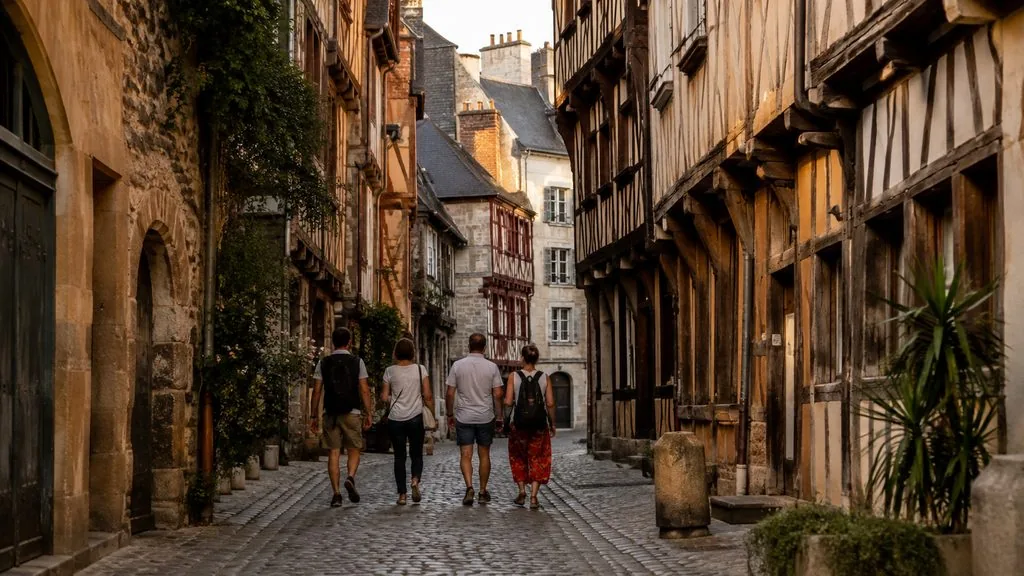
Entry here is cheap or free, so a tour is never bought for access. It is bought for somebody explaining why a duke built a white palace inside a black fortress, which is worth paying for if you want the place to make sense. The lowest-priced of the five is a 2 to 2.5 hour walk from the Porte Saint-Pierre through the château, Bouffay and the Passage Pommeraye, in French only; its 5.0 comes from seven reviews, a sample not a verdict. The higher-priced private walking tour runs in English or French for two hours on a route you choose, with the steadiest record here at 4.8. The mid-range licensed monumental tour is the only one that walks you inside the château, 30 minutes through a separate entrance, and the only one stating wheelchair access; three reviews, so treat its perfect score carefully. The highest-priced is the e-bike tour, 22 km of green line, 1.5 m height minimum. The City Pass is the other mid-range option and the only one including museum admission outright, priced by duration, so longer passes cost more overall and less per day.
My own answer, on the doorstep: walk the free half first, decide about the museum ticket once you have seen the courtyard, and buy a guide for the city rather than for the gate.
Frequently asked questions
What is the Castle of the Dukes of Brittany?
It is the Château des ducs de Bretagne in Nantes, the seat of the last independent dukes of Brittany. A castle stood on the site from 1207; the one you walk into was begun in 1466 by Duke François II and continued by his daughter Anne de Bretagne. It has held the Musée d’histoire de Nantes since it reopened on 9 February 2007. More on who built it and when.
What do the French call a castle?
A château, which covers both a fortress and a grand residence, and this site is both at once: a black granite curtain wall with seven towers on the outside, a white tufa flamboyant-Gothic palace in the courtyard. That contrast is the reason to walk in even if you never buy a ticket — see what is inside the walls.
Is the Château des ducs de Bretagne free?
The courtyard, the 500-metre rampart walk and the moat gardens are free, seven days a week, with no ticket. Only the museum inside the ducal palace charges, and it is the low-cost end of anything you will pay for in Nantes: a full rate, a reduced rate for 18–25s and teachers, free for under-18s, and free for everyone on the first Sunday of the month outside July and August. The full list is on what you can see for free and tickets and prices.
Is Nantes castle open on Mondays?
The grounds are; the museum usually is not. Outside 1 July–31 August the museum, exhibitions, castle interiors and library close on Mondays, while the courtyard and rampart walk keep their 8:30am–7pm hours and the moat gardens open at 8am. From 1 July to 31 August the museum runs seven days a week. See opening hours.
How long do you need at the Château des ducs de Bretagne?
About 30 minutes for the ramparts, an hour and a half to two hours for the museum’s seven sequences, and half a day if you carry on into the old town. The guided walks that take in the château run 2 to 2.5 hours. There is a fuller breakdown on how long to visit.
Is Nantes in Brittany?
It was the historic capital of the Duchy of Brittany, and it now sits in the Pays de la Loire region, which is why the question is still argued about in Nantes bars. The castle is where the argument comes from: Anne de Bretagne married two kings of France, and Breton independence ended with her. The story is on the history page.
What is Brittany famous for?
Its own ducal history, of which this castle is the surviving seat, and the long fight to stay independent of France that ended in Anne de Bretagne’s marriages. In Nantes itself people come for the château, the mechanical Elephant at the Machines de l’île, the Passage Pommeraye and the 22 km green line — which the e-bike tour follows end to end.
Is the Château des ducs de Bretagne worth visiting?
The free half is worth it for anyone who can climb stairs: 500 metres of rampart, seven towers and the white palace in the courtyard, for nothing. The ticketed museum is worth it if you like city-history museums and want the slave-trade material, which Nantes does not soften; it is less rewarding if you came for furnished medieval rooms, and the 1945-to-now extension is uneven. My verdict is on is it worth visiting.
Still have questions? Email us [email protected]